
Arda's Kyle and Uriel on the Within Tolerance Podcast
Arda's founders on the Within Tolerance Podcast, on digitizing Kanban cards, the Austere MFG origin story, and what changes on a shop floor when reordering becomes a scan.
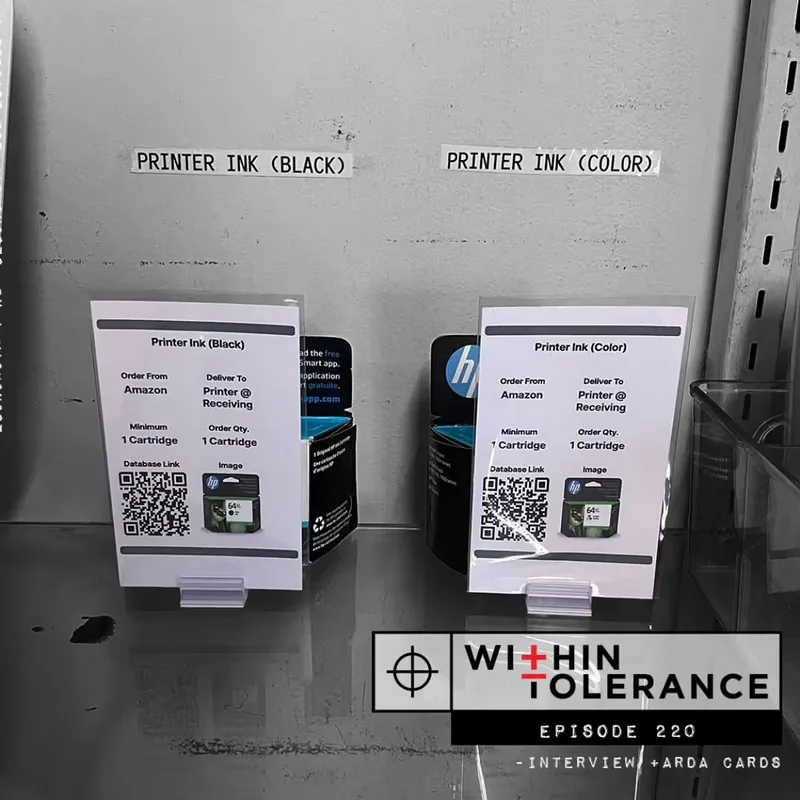
Arda’s co-founders Uriel Eisen and Kyle Henson recently joined the Within Tolerance Podcast for “Episode 220: Arda Cards.”
About the Within Tolerance Podcast
Within Tolerance covers machine shop work, CAD/CAM, and the rest of day-to-day manufacturing practice.
Transcript Highlights:
Intro & Theme: Kanban and Digital Tools on the Shop Floor00:00–2:30
Hosts introduce Kyle Henson and Uriel Eisen, co-founders of Arda, who share their journey of using Kanban principles to improve manufacturing processes. The focus is on how they digitized the traditional Kanban card system to enhance operational efficiency and help small manufacturing businesses grow.
Founders’ Backgrounds and Origin Story2:30–10:00
Uriel, with aerospace and manufacturing prototyping experience, implemented Toyota Production System’s Kanban in his small buckle manufacturing company Austere Manufacturing, lifting throughput without adding hires or machines. Kyle, experienced in B2B SaaS and private equity transactions, joined after seeing Uriel's manual Kanban cards and helped work out what a digital version would look like.
From Physical Kanban Cards to a Digital System10:00–18:00
Kyle and Uriel describe the original Kanban system using physical cards to reorder inventory exactly when needed, eliminating excess stock and improving cash flow. They explain how Arda started by creating a no-code MVP that made it easy for users to generate and manage Kanban cards digitally, which took most of the inventory and order-management work off their own desks.
Customer Acquisition and Early Validation
18:00–26:00
The first customers came through Uriel’s Instagram machinist following, a podcast and cold calling. The founders emphasize the importance of validating product-market fit by getting paying customers before building software. Starting with spreadsheets and no-code tools allowed rapid iteration and real customer feedback.
Scaling the Product and Transitioning to Custom Software26:00–34:00
As usage grew beyond what no-code tools could carry, they began building proprietary software to increase scalability and add advanced features while maintaining integration with their existing platform via APIs. Challenges include replicating third-party integrations and managing updates across customers.
Value Delivered to Customers - Doubling Revenue and Saving Labor34:00–42:00
Arda’s system enables manufacturers to avoid costly emergency orders, reduce wasted labor and improve innovation capacity. Some customers doubled revenue by eliminating inefficiencies like running out of parts mid-production and focusing labor on higher-value tasks like launching new products.
Target Market and Business Model 42:00–48:00
Their ideal customers are small to mid-sized custom manufacturers in niches like vehicle conversion, boats and custom jewelry, where products are complex but built from standardized base materials. The product is designed for ease of use on the shop floor to ensure high compliance.
Marketing Strategy and Future Growth Plans48:00–55:00
They use content marketing, free tools for generating Kanban cards, SEO and AI-driven email campaigns to nurture leads. Cold calling remains a valuable outreach channel. Plans include building a repeatable sales motion with demos and expanding into higher revenue contracts.
Podcasting and Personal Brand as Distribution Channels55:00–1:00:00
Uriel’s podcast and Instagram presence in manufacturing communities provided early visibility and credibility. The podcast serves as a knowledge hub, helping founders learn about different verticals while attracting potential customers organically.
Advice for Founders and Looking Ahead1:00:00–1:03:30
The founders advise entrepreneurs to validate ideas by securing paying customers before product development. They highlight the joy of building a strong, talented team and express excitement to help small businesses thrive by freeing owners from operational firefighting to focus on innovation.
Contact and Resources1:03:30–endListeners are encouraged to visit arda.cards to try their free Kanban card generator and to follow Arda on Instagram. The founders welcome contact via email and LinkedIn for further engagement.