
Reorder points that live on the shelf, not in a spreadsheet
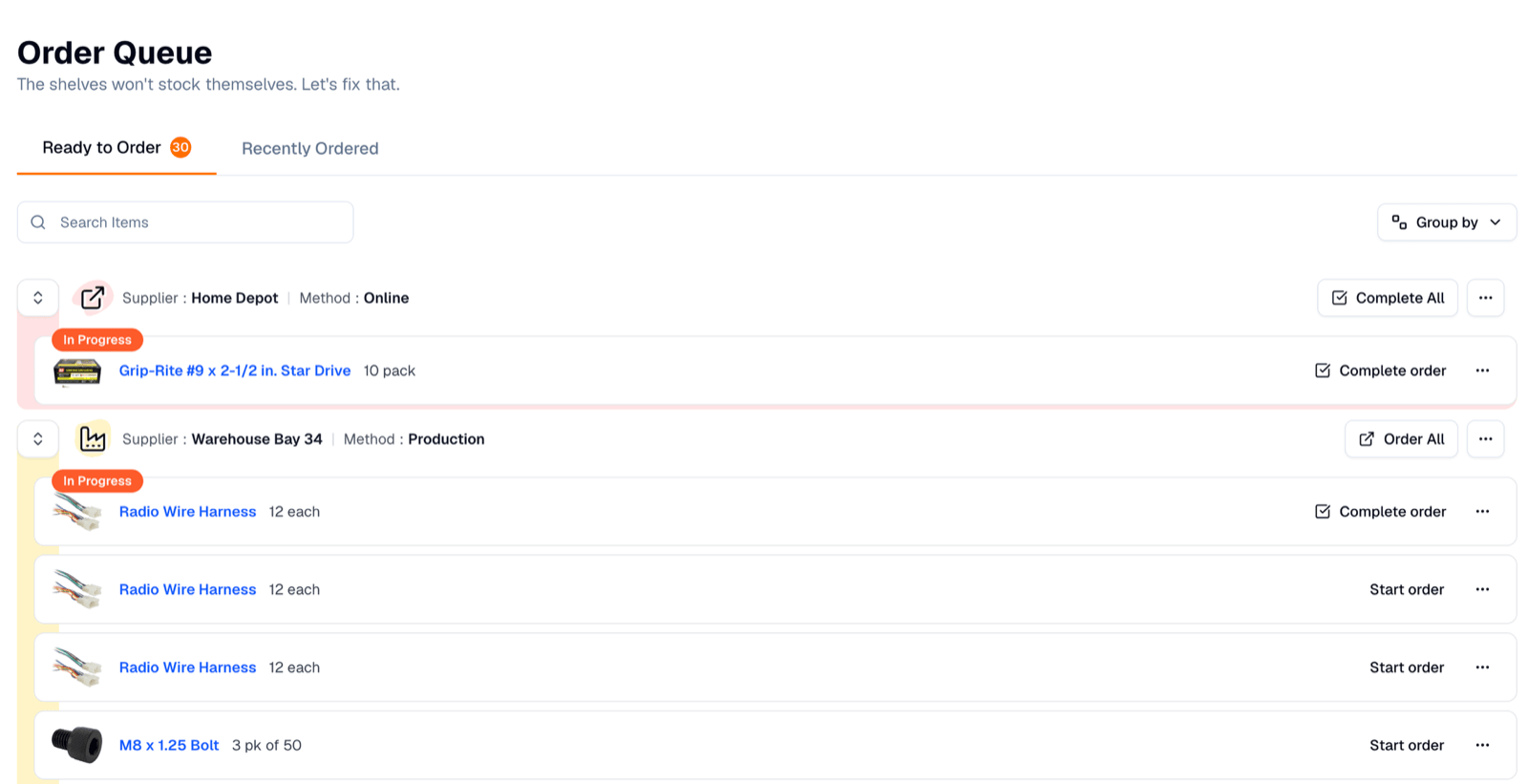
Own the whole loop from one place, without a sheet to keep current.
Shops like yours
- RossmönsterPop-up truck campers
- Assembly IndustrialCustom trucks and industrial metalwork
- Fat Fender GarageRestorations and parts for classic Ford and Chevy trucks
- Austere ManufacturingMachined specialty buckles
You walk the floor with a clipboard, and the count still doesn't match the shelf.
The reorder points live in a sheet no one keeps current.
What changes for you
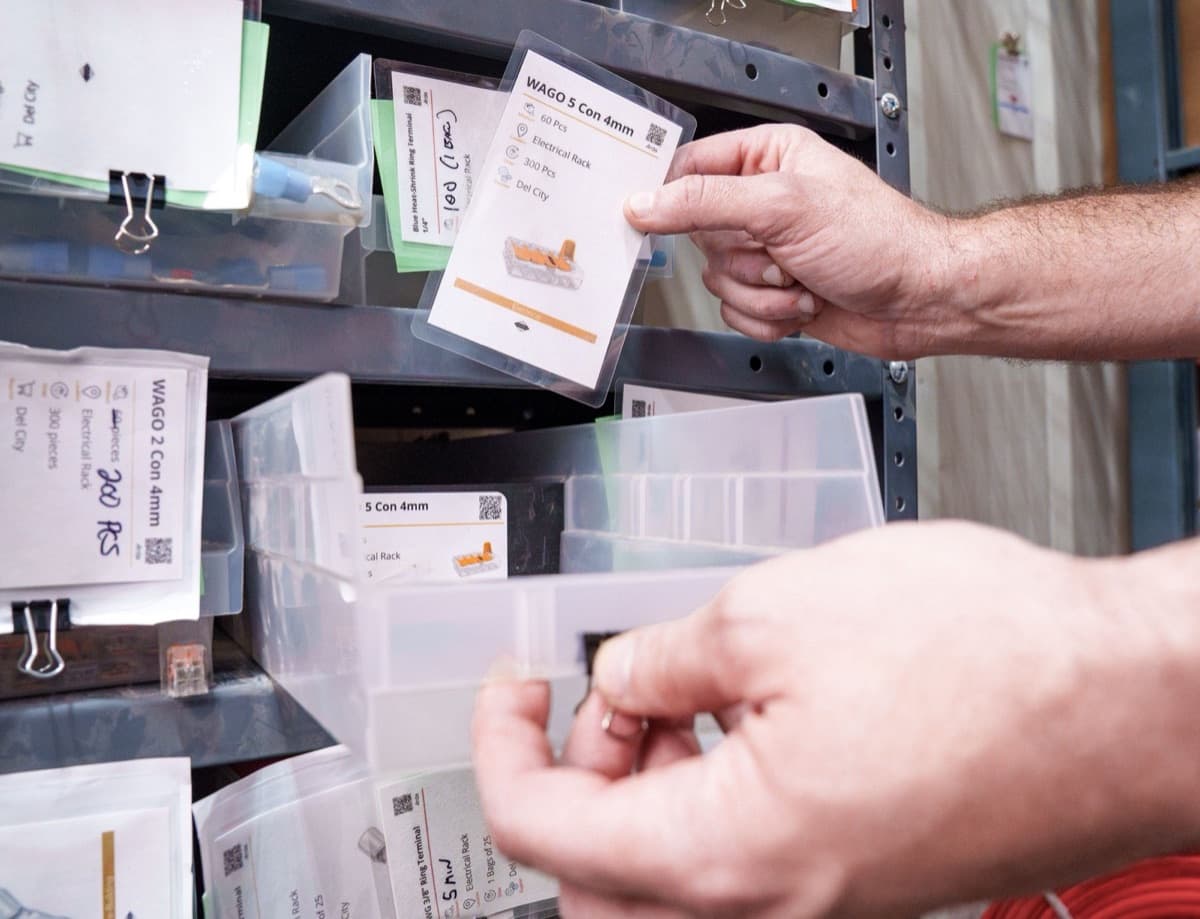
The card holds the discipline
Each bin's reorder point lives on its card. Maintain no sheet, chase no one for updates.
- No card, no order.
- It doesn't walk out when a person does.
When we started with Arda... we were almost a year behind on fulfilling orders. Now our oldest order is 20 days old.
See where every card sits
Every card is somewhere you can see it: on the shelf, in the queue, on order, or back in place. The photo on the card and the label is the one from the item you bought last time.
- Photos cut wrong-item picks.
- Faster onboarding for a new hire.
Your rollout
- 1
Tag one category
Import from your order history and print.
- 2
Watch the first pull
Confirm the reorder point on real usage.
- 3
Scale
Expand category by category.
What usually worries people
We have a new hire next week, and the card system is the first thing they'll skip.
A card at the reorder point is hard to skip, because it is physically in front of the part. It also explains itself: the minimum, the order quantity, and the location are printed on it. The process doesn't walk out when a person does.
Who keeps the reorder points current?
The card does. The number lives at the bin instead of in a sheet someone has to remember to update. When a part stocks out twice in a quarter, you raise one number and reprint one card.
Do I need to get every item right before we start?
No, and trying to is the usual way this stalls. Start with one category, card the parts that keep burning you, and correct the numbers against real usage over the first few weeks.