Every bin tells you when to reorder
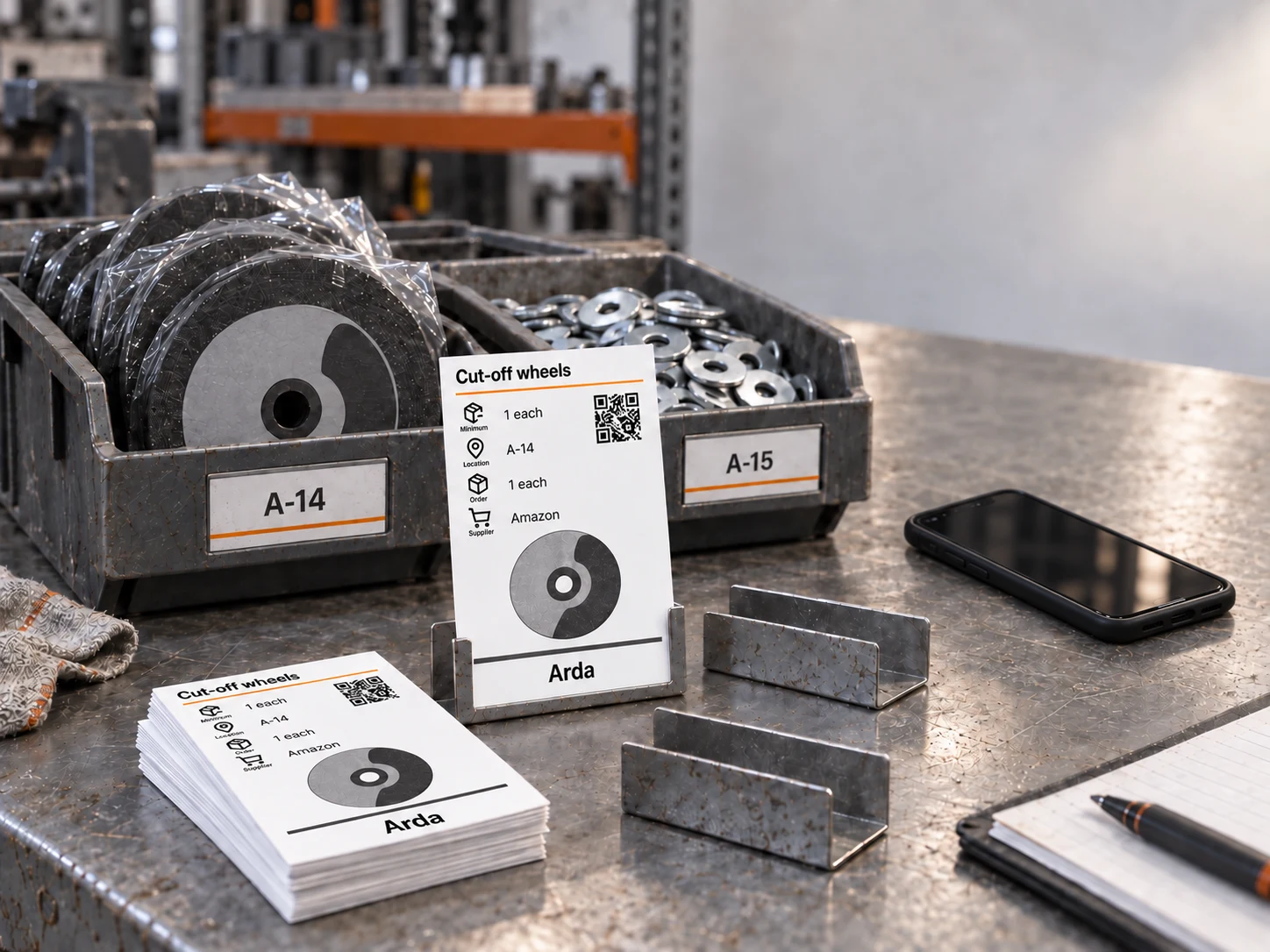
A QR-coded kanban card sits in front of your minimum. A worker pulls it, drops it in the reorder bin, and the reorder is on its way. Print the cards, shelf labels, and breadcrumbs yourself, from one tool.
You run out of a part and don't know until the line stops.
The reorder point lives in someone's memory, and memory takes days off.
How it works
- 1
Print the cards
Pick a cell or category and send the PDF to the dual-tray printer.
- 2
Tag the bin
Tuck each card in front of its minimum as a physical trigger.
- 3
Pull the card
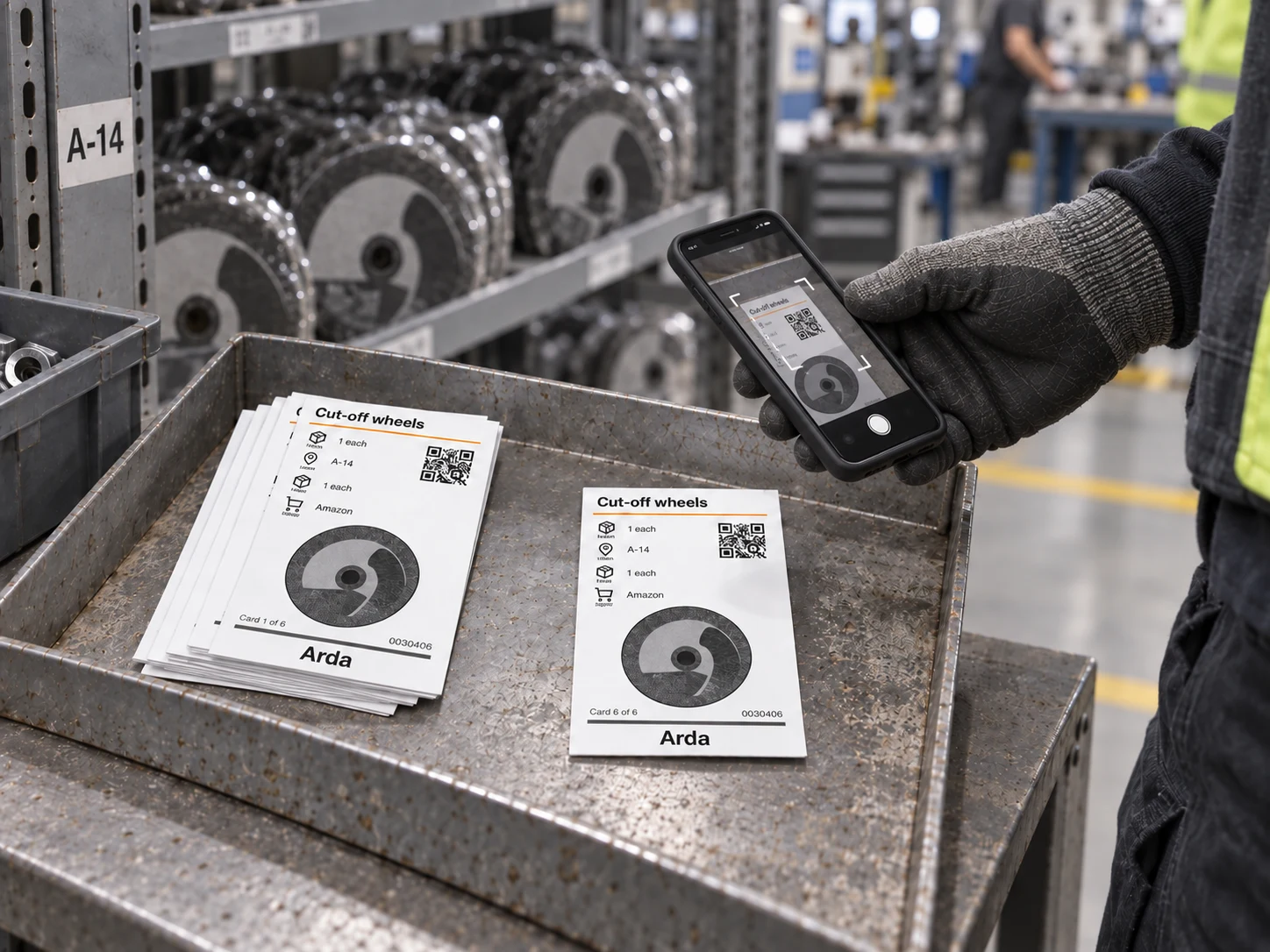
A worker pulls it at the minimum and drops it in the reorder bin.
- 4
Scan the batch
Someone scans the cards, and each one lands in the Order Queue.
Feature breakdown
The card carries the reorder point
The minimum quantity, the order quantity, and the location print on the card, so the number lives on the shelf rather than in a spreadsheet or someone's head.
- No card, no order.
- Discipline survives turnover.
- Min qty
- 4
- Order qty
- 12
Print cards, labels, and breadcrumbs in one run
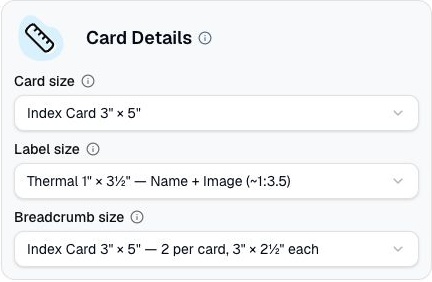
Arda produces the PDF sized for the HP 9135E dual-tray printer, cards from one tray and labels from the other. No design software and no third-party print service.
- Card size and color are set per item.
- Peel, stick, done.
Scan a stack like a grocery checkout
A worker pulls the card. Someone scans the batch at any QR-capable workstation. The USB scanner puts the card's URL straight into the browser, so there is nothing to log into and nothing to type.
- Works with gloves on.
- Under 30 seconds per scan.
The kit means you start the day it arrives
The Quickstart Kit ships the printer, a laminator with a cutter, pre-cut index cards, Avery-compatible label templates, and USB QR scanners.
- Nothing to specify or source.
- Scanning starts on day one.
Why it matters
- For the person at the bin
- Nothing to remember, and nothing to be blamed for. The system asks for ten seconds and gives back the part they needed.
- For the Purchasing Manager
- The discipline stops depending on any one person. When he is out on Monday, the cards are still on the bins and still say what they say.
- For operations
- The demand signal starts on the floor at the moment stock is consumed, instead of getting reconstructed afterwards from memory.
- Strategically
- The physical layer makes the rest of the loop possible, because there is no queue, no PO, and no receiving step until someone pulls a card. It also makes turnover survivable, which separates a system from a habit.
- Risk of leaving it alone
- The shop grows past what one person can hold, and the first sign of it is a stopped line rather than a warning.