P/N
Minimum
Location
Order
Supplier

Going to IMTS? Your cards will be waiting at booth 135836. → Claim yours
Log InSign Up FreeReceive deliveries in Arda. Put the stock where the card says it goes. Hang the card back at its reorder point, and the next pull orders the part again.
Your team puts half the delivery away and leaves the rest by the door. The card stays in the receiving pile, so that stock point has no card on it the next time the part runs low. Receive the delivery in Arda and walk the card back to its reorder point before you move on.
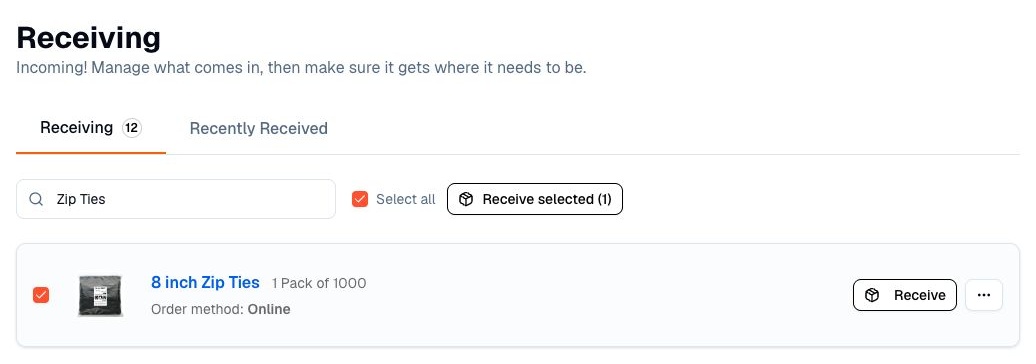
Find the open order for what showed up.
Select the items that came in and hit Receive.
Carry the parts to the shelf the card names.
Put the card at its reorder point for the next pull.
Select what came in and hit Receive. Return the cards when you replace the stock. When that shelf runs low again, somebody pulls the card and scans it. The reorder is in the Order Queue before anyone thinks to ask for it.
The location and sub-location travel on the card. Whoever carries the box out of receiving reads A-14 off the card and walks it straight there.
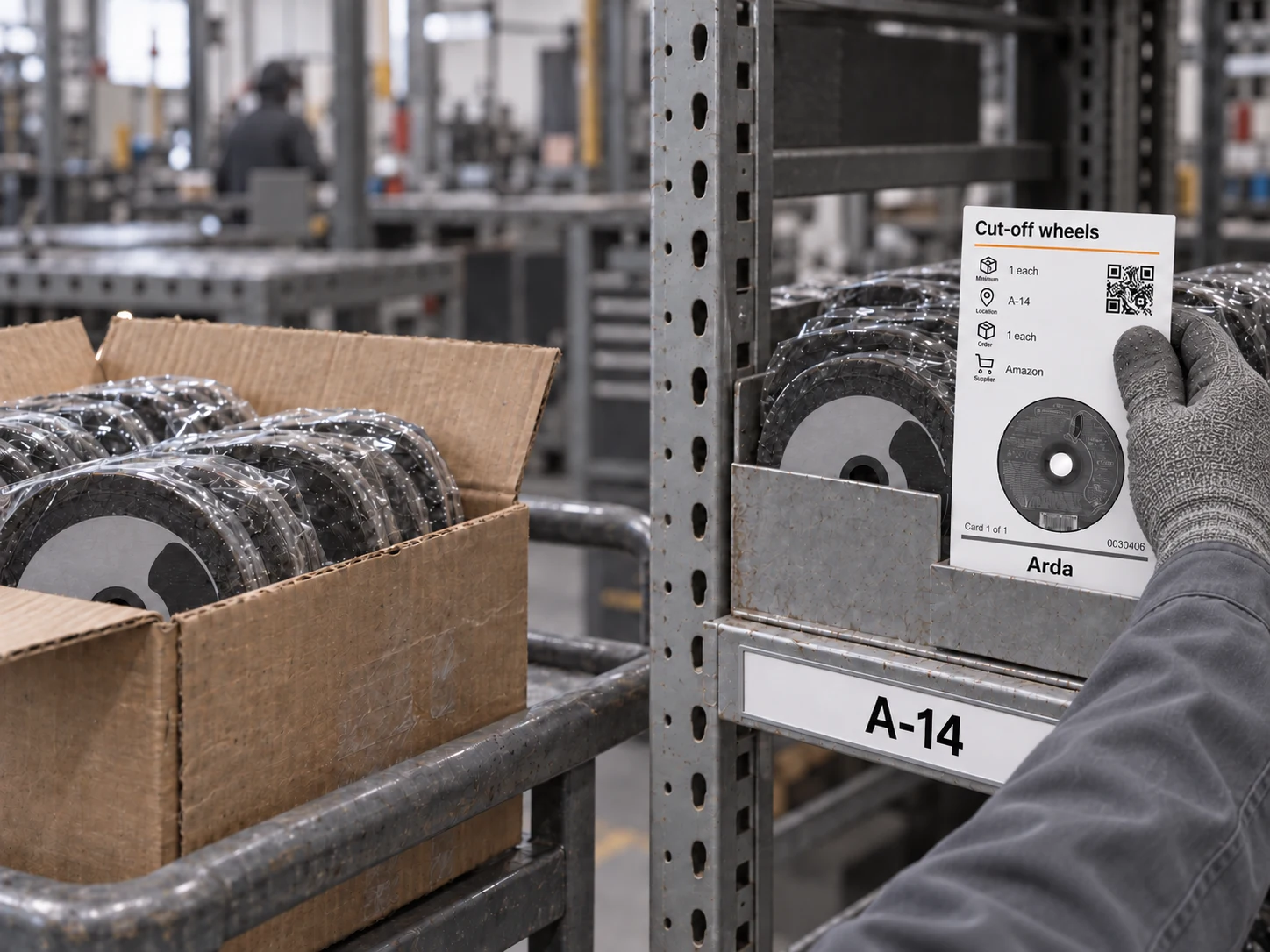
Turn a part you order into a scannable Kanban card.