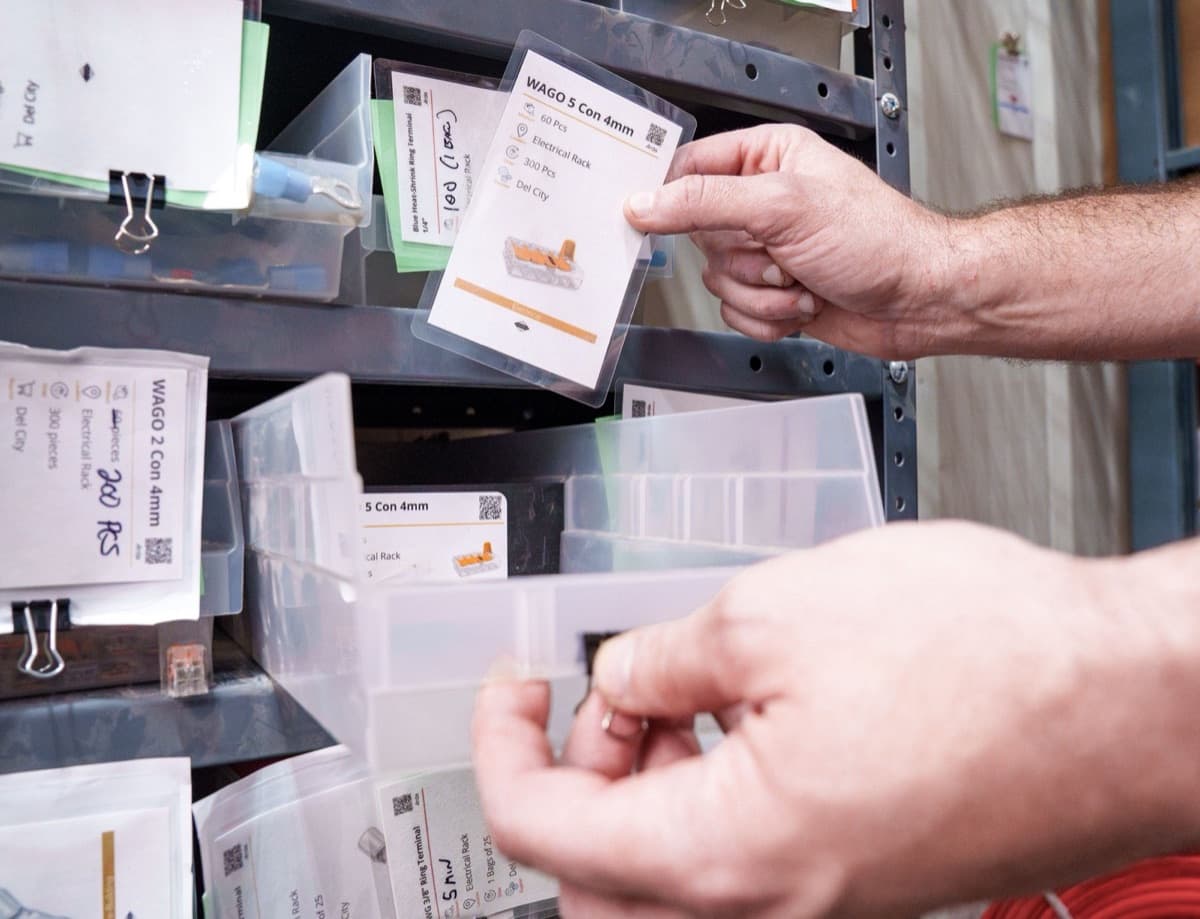
Kanban cards clipped to bins on a parts rack at Rossmonster
Their outcome
Buy what the floor used, not a guess
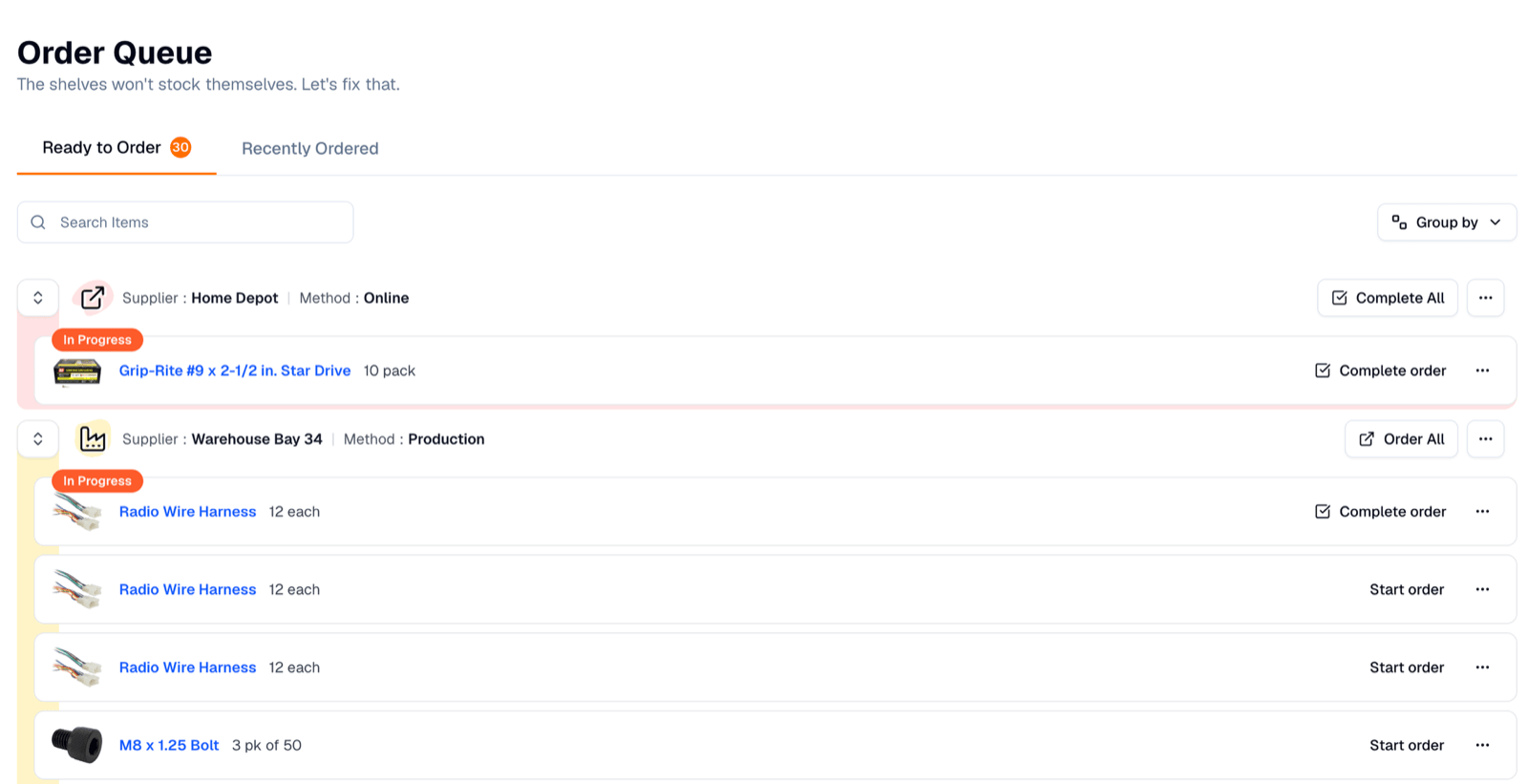
Every order starts from a scan. Arda gives you the quantity and the demand signal, and you raise the purchase order in the system you already use.
Real demand, not guesses.
Works alongside your ERP.
Your rollout
1
Pilot
Card the parts you run out of most.
2
Floor
The team pulls and drops, and you work one queue.
3
Scale
Add categories as the habit sticks.
What usually worries people
We already have an ERP.
Keep it. Arda doesn't replace your ERP, it gives it the consumption data the shop floor never keys in. Push a draft PO through the approvals you already use, or keep raising it there yourself.
Half my suppliers don't take online orders.
Then half your queue is email, PO, and phone, and it arrives grouped that way. One honest edge: phone-only suppliers still need you to advance the card by hand after the call. Everything else lands in one queue, grouped by supplier.
Does this add clicks to my day?
It removes the hunt. Every “we're out of X” arrives in one place instead of by phone, text, and sticky note, and each card opens the exact item you bought last time, not something similar.

 Uriel Eisen